Boksortiment

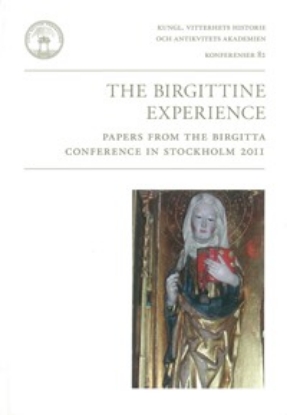
The Birgittine experience : papers from the Birgitta Conference in Stockholm 2011
“The Birgittine Experience” brings together nineteen papers presented at The Birgitta Conference 2011: A Marcus Wallenberg Symposium (Stockholm, 6-8 October 2011). This richly illustrated volume offers a broad view of recent Birgittine scholarship. The plurality of the field is clearly demonstrated by the fact that the authors represent not only several academic disciplines bur also no fewer than
222 kr

The Dolmen in Alvastra
One April day in 1916, three large stone blocks were blown up in a field on the south slope of Mount Omberg. The blast exposed a large number of human bones. The event called to mind a folk tradition about the murder in the twelfth century of King Sverker the Elder, who was then residing in Alvastra. The king was killed by his stable boy on the way to Christmas matins in 1156, and the assassin is
189 kr
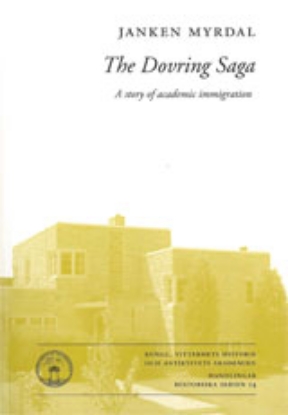
The Dovring saga : a story of academic immigration
Every life reflects the history of its period and will reveal something about society as a whole. The reader will find a similar use of a life-story here. The subject is Folke Dovring, who around 1950 tried to introduce new ideas about history based on statistical analysis and history from below. His attempt was made in vain and he was rejected by the Swedish academic community. Leaving Sweden in
221 kr
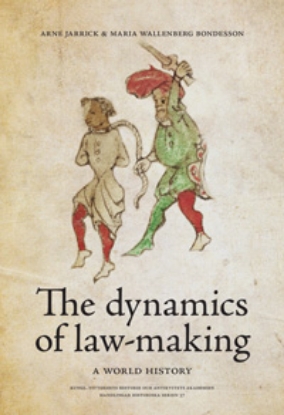
The dynamics of law-making
This study of the long-term history of law-making aims at a better understanding of the cultural dynamics of human society as reflected in the efforts made to regulate human interaction.
340 kr

The early history of the Swedish avifauna : a review of the subfossil record and early written sources
This book summarizes the history of the Swedish avifauna based on early publications and manuscripts (mostly written before AD 1800), as well as data obtained from archaeozoological analyses of bird remains recovered from more than 500 archaeological and natural deposits. The evolution and distribution of the Swedish bird fauna during the 14,000 years since deglaciation began are outlined based on
250 kr
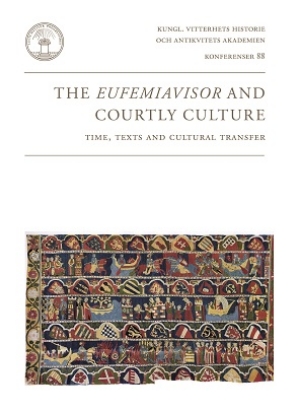
The Eufemiavisor and courtly culture : time, texts and cultural transfer : papers from a symposium in Stockholm 11-13 October 2012
The present volume contains proceedings from the symposium The Eufemiavisor and Courtly Culture – Times, Texts and Cultural Transfer, held in Stockholm in October 2012.
222 kr

The Gallery of Charles XI at the Royal Palace of Stockholm - in perspective
In 1700 the construction of a new royal palace in Stockholm was under way. At the behest of the Swedish king, the architect Nicodemus Tessin the Younger invited French artists and artisans to come to Stockholm to work on the interiors. Largely completed in 1703, the gallery in the state apartment celebrates the reign of King Charles XI (r.
250 kr
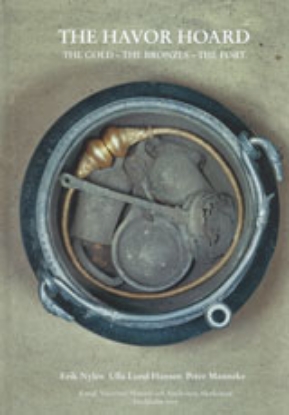
The Havor hoard : the gold, the bronzes, the fort
The Havor hoard came to light in Gotland, Sweden in 1961, on the first day of the archaeological excavation of an ancient ringfort, in situ against the inner face of the fort wall. The hoard consists of a gold neckring (torc) in a situla along with Roman wine-serving utensils and a pair of bronze bells. The hoard belongs to the beginning of the first millennium A.D. The neckring is an outstanding
250 kr
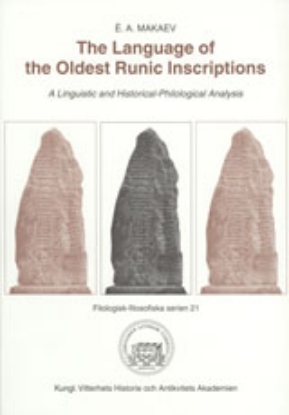
The Language of the Oldest Runic Inscriptions : A Linguistic and Historical-Philological Analysis
Ènver A. Makaev's "The Language of the Oldest Runic Inscriptions" was published in 1965, but it has never reached the broad readership it deserves within the world's scholarly community because it was written in Russian. Reviews in Western journals called attention to this work, but they could not replace direct access to the work present translation into English makes this important contribution
130 kr
The oriental mounts from Birka's Garrison : an expression of warrior rank and status
During three archaeological excavation campaigns in the Garrison area of Birka, unique evidence of Viking Age military material culture was uncovered. Numerous finds show evidence of links between the Birka warriors and the Eastern trade route. The cultural exchange that took place along this route influenced both weaponry and dress, creating a stylistic expression described in archaeological rese
180 kr